Concord Pacific Place
The former Expo lands
From an industrial wasteland to the global model for urban livability.
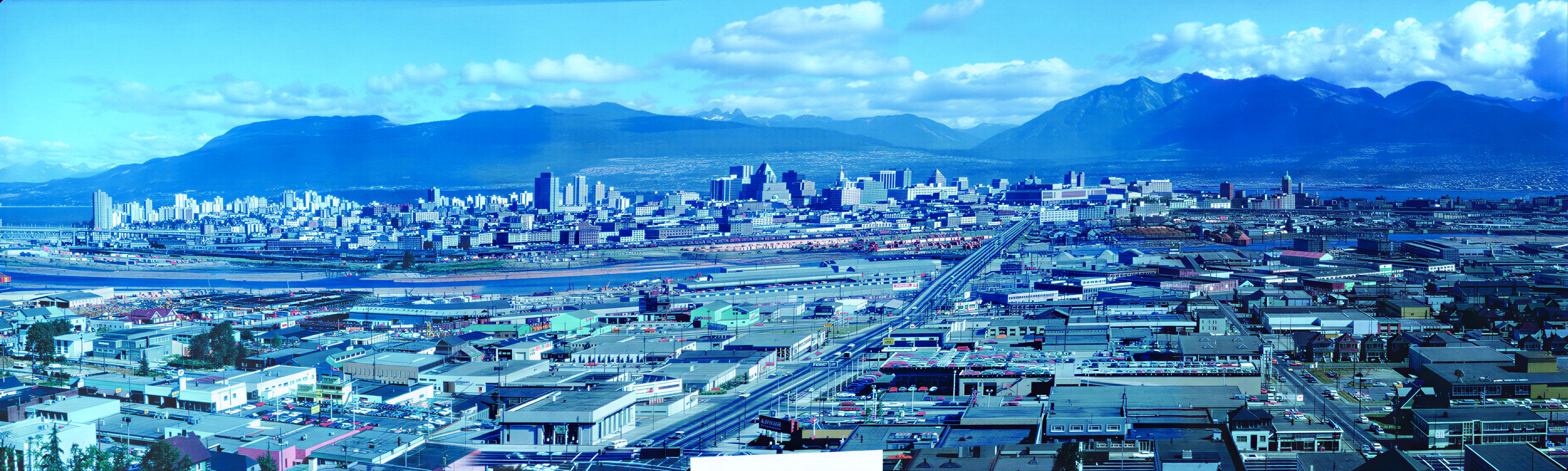
Forty years ago, the north shore of False Creek was contaminated, smoggy, severed from the city. Today it is the international benchmark for how to build a neighbourhood. This is the story of how it happened, what it gave back, and the one chapter still unwritten.
The transformation
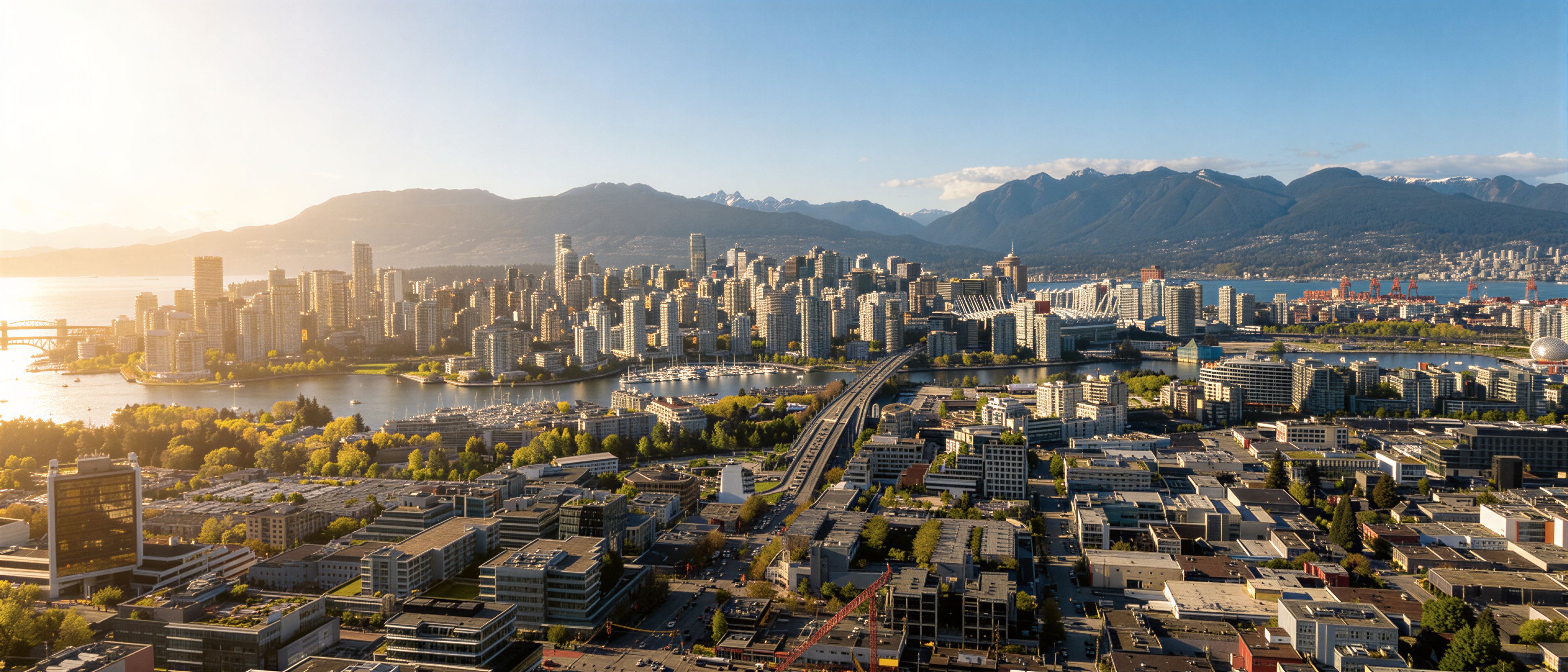
What was once a brown and smoggy blot on one of the world's prettiest cities is now its defining waterfront.
A 40-year record
Nine neighbourhoods. Seven city councils. One continuous commitment.
What was built
Vancouverism started here.
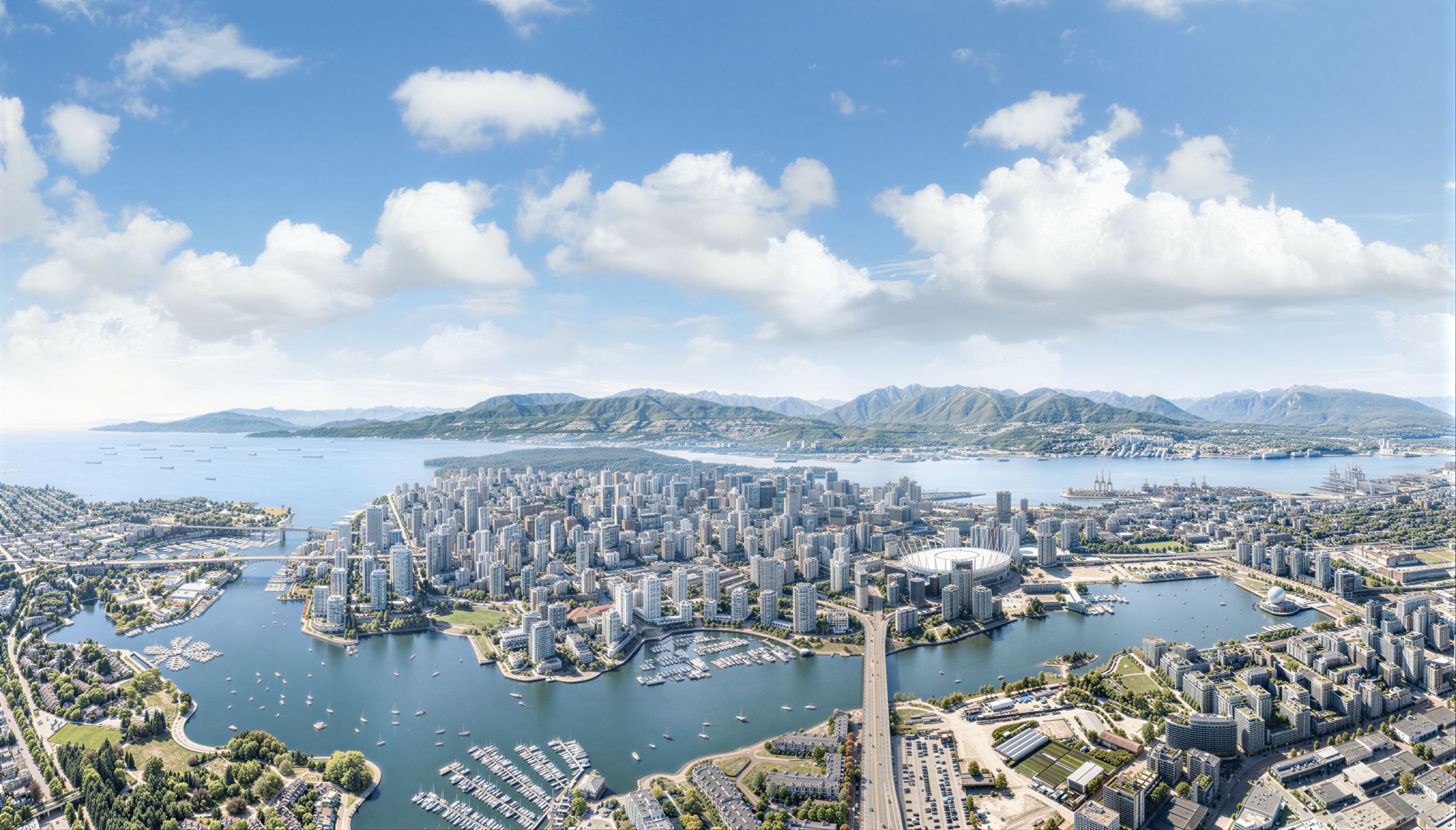
Concord Pacific Place is more than a community. It is the original model for an urban planning paradigm known the world over as Vancouverism: a high-density, mixed-use form that emphasizes sustainability and maximizes livability. The design language was set here, and it has been replicated across continents.
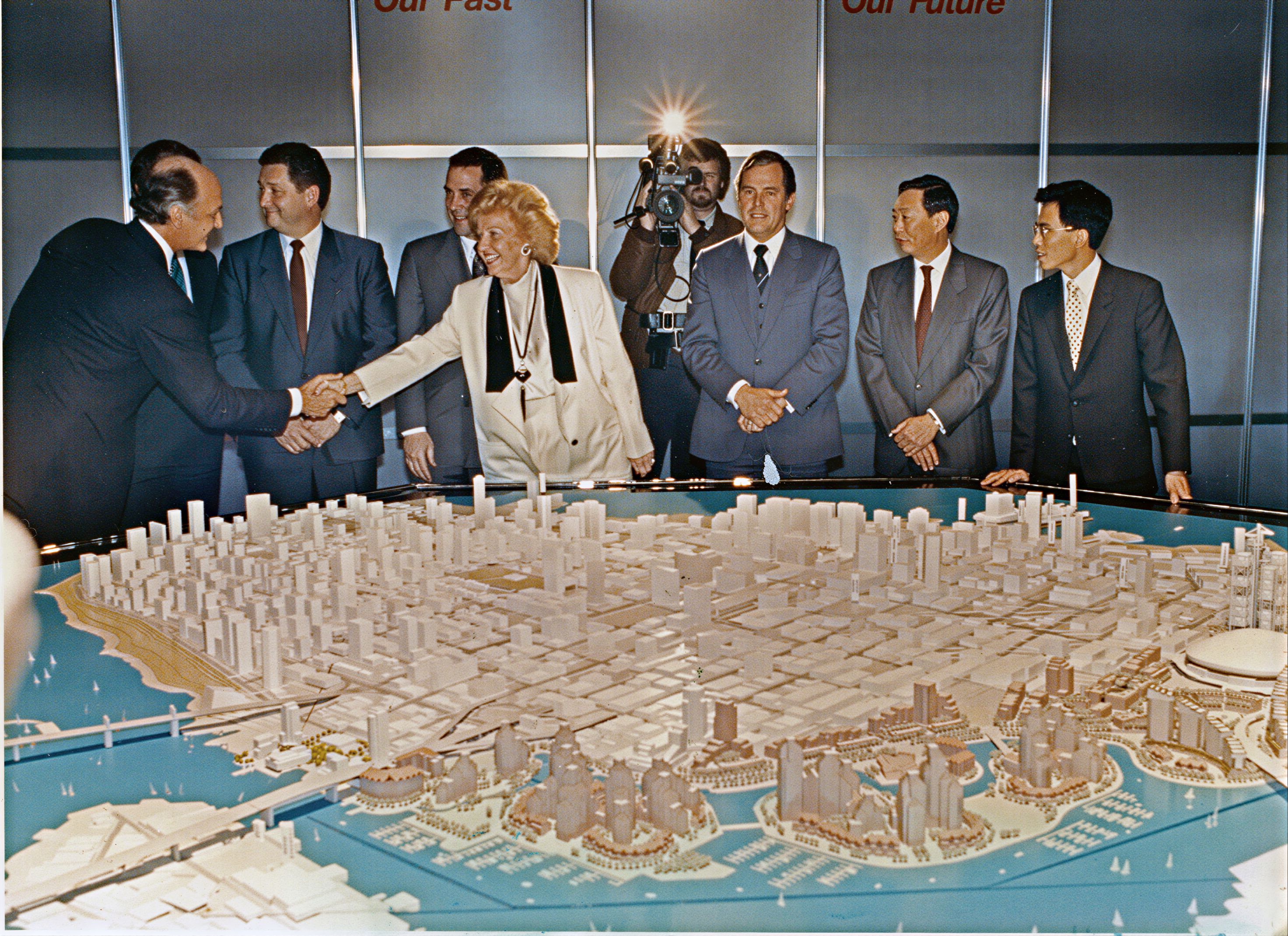
With Concord Pacific in the lead, innovation was always the order of the day. The first Lagoons Plan proposed a series of islands linked with bridges, an idea that might have helped clean the inlet by increasing water flow. Subsequent plans, developed in cooperation with the City and with input from thousands of public participants, concentrated on outcomes that would preserve the existing line of the waterfront and maximize public access through the site and along the seawall.
The False Creek North Official Development Plan broke the 204-acre Expo site (164 acres of land, 40 acres of water) into eleven neighbourhood parcels, from Beach and Roundhouse in the west to the culminating Concord Landing neighbourhood in the east. Even in and around three small parcels sold to other participants, Concord assumed responsibility for planning and for the development of services, roads, and the public realm.
A once-in-a-lifetime consensus in the history of Vancouver.
In four short decades, Concord employed tens of thousands of workers, earning billions of dollars in wages, to build more than 11,000 homes and social housing units. The neighbourhoods are filled with parks and playgrounds, linked by pedestrian paths and a critical connection in Vancouver's 30-kilometre seawall. A community centre, school sites, and daycares followed; the mixed-use form ensures that all residents are within easy walking distance of the services necessary for day-to-day life.
Returned to the city
Over half of the original 204-acre Expo site has been built and turned over to the public, with no public investment.
- 11,000+ Homes built across nine neighbourhoods.
- 50%+ Of the land gifted to the City of Vancouver in perpetuity, as parks, pathways, and public realm.
- 1,100+ Non-market housing units generated, including 670 currently under construction.
- $110M Already contributed by Concord toward the removal of the Georgia and Dunsmuir viaducts.
- 4 city parks George Wainborn, David Lam, Coopers', and Andy Livingstone.
- 3km Of seawall and pathway, now part of Vancouver's signature 30-kilometre route.
- 80+ art commissions Across the country. The largest public art program in Canada, much of it pioneered here.
- $500K per year Spent operating the world's largest pop-up park, on the site of the future Concord Landing.
- $0 Public investment required for any of the above. Hundreds of millions of dollars in public benefit, privately funded.
Land always in use
The land has never sat idle.
For 36 years, Concord has consistently made undeveloped space available to the City and Province for major events and bids: the Molson Indy (1990–2004), the 2010 Olympic Games bid, preparation, and games (2003–2010), the 2026 FIFA tournament bid process (2018), the Concord Pacific Dragon Boat Festival, Run for the Cure, and the Vancouver Sun Run, year after year.
The time has come, however, to stop assuming the property in City and Provincial bids alongside BC Place or Rogers Arena. Future park plans will continue to accommodate the events that have become part of the city's identity.
A global model
The blueprint for waterfront living, replicated globally.
Concord Pacific Place is hosted by Cornell University's Baker Program in Real Estate, by visiting planners, by government delegations, and by universities the world over, who come to study the original example of the Vancouverism planning paradigm.
- TorontoConcord CityPlace, on the former CN lands
- SeattleSouth Lake Union and the central waterfront
- San DiegoEast Village
- LondonCanary Wharf
- HamburgHafenCity
- DubaiDubai Marina
The final chapter
One neighbourhood remains. The path is blocked by two viaducts.
Concord Pacific is eager to complete this city-changing project with a culminating stage that will also restore historic connections long broken in the city. The principal obstacle, blocking access to False Creek and delaying construction of the ninth and final neighbourhood, is the complex and controversial status of the Georgia and Dunsmuir viaducts.
These two raised roadways, opened in 1972 as part of a planned freeway from downtown to Highway 1, sever a stretch of the city from downtown to Strathcona, separating Chinatown and Gastown from False Creek. Aside from their lost purpose and their obstructive presence, the viaducts are also seismically unsound, a danger in even a moderate earthquake.
Since before the 2010 Olympic Games, Vancouver's City Council has been working on plans to remove the viaducts and restore the connection. From 2011 to 2015, council and staff held public consultations and confirmed the viaducts were near the end of their life. In 2015, a City plan was reported with an estimated cost of $200 million. A planning and consultation process followed, including more than 17,000 residents, with results released in 2017.
The City presented the $200-million budget to the five affected landowners — Concord Pacific, Canadian Metropolitan Properties (Plaza of Nations), BC Pavilion Corporation, Aquilini (Arena Lands), and the City itself. Staff affirmed that costs would be recovered from development contributions and from sales or leases of City land freed by the viaducts' removal. All landholders began rezoning their sites, releasing preliminary plans that acknowledged the expectation. Canadian Metropolitan Properties' conditional rezoning in 2018 included a $100 million community amenities charge designated for viaduct removal.
Concord itself has already made a $110-million contribution that the City said it was allocating to the removal of the viaducts.
Unfortunately, the City's own process stalled. Some estimates for removing the viaducts and building the replacement roadworks have quadrupled from the original $200 million. The viaducts are in the last few years of their life, and they remain vulnerable to catastrophic damage in an earthquake. They also continue to stand in the way of any resolution that would let Concord proceed with Concord Landing.
Concord remains committed to proceeding as soon as the City clears the way. Concord is the only landholder with active Northeast False Creek plans. We understand that the City is now seeking Provincial and Federal loans to expedite removal of the viaducts, and we hope for early success or for another solution that recognizes the urgency and the potential of the work to follow.
It will clear a path for our own culminating challenge: the building of Concord Landing — one last exemplary neighbourhood and one more critical connection between False Creek and the larger community, continuing the urban fabric and fully realizing Concord Pacific Place on the Expo lands.